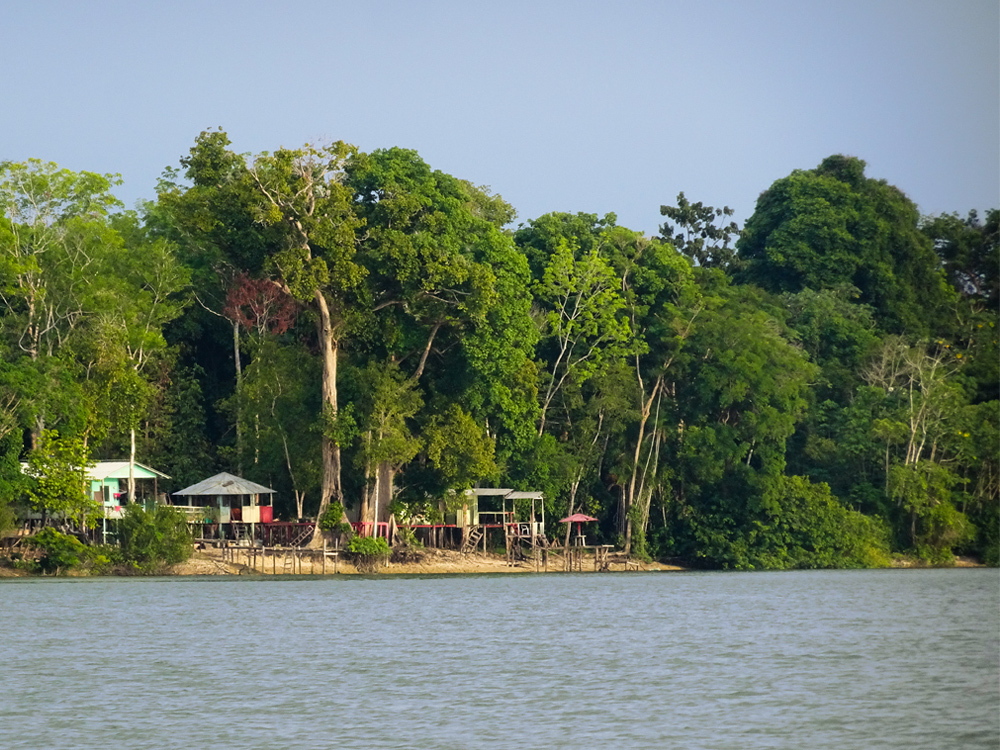


Community-Based Tourism
Community-Based Tourism (CBT) is a model in which local communities design, operate, and manage tourism offerings, maintaining control over their territories, prices, revenue, and rules. Tourists, in turn, have the opportunity to access direct and authentic knowledge from those who know the forest and participate in real-life experiences that are part of the daily lives of the hosts. The experience is unique, and the income generated has a direct impact on the community.
When well-structured, community-based tourism becomes more profitable and environmentally responsible than predatory activities. It creates a real incentive: standing forest is worth more than felled forest. Communities earn income, maintain their culture, and strengthen their governance.
The Amazon possesses unique assets that spark genuine interest in visitors from all over the world. The challenge lies in creating the right links: connecting communities with the market, structuring quality operations, strengthening local leadership, and ensuring that income stays with those who live in the territory. The objective of this project is precisely that: to structure community-based tourism models in Amazonian territories that enable this transformation.
Problem situation
In the territories of Alter do Chão and Marajó, in Pará, a paradoxical dynamic exists. On the one hand, activities with high environmental impact, such as deforestation, mining, and beach erosion, exert continuous pressure on ecosystems and local communities. On the other hand, both territories possess significant and still unexplored tourism potential: exuberant nature, access to rivers and forests, ancestral knowledge about the territory, and a vibrant local culture. Part of this potential is captured only by the conventional tourism chain.
To generate income from TBC (Transfer of Capital Markets), there are a number of bottlenecks:
- Lack of business organization: communities do not have structured business models for tourism offerings.
Limited market knowledge: there is no clarity about who wants to visit, when they visit, or how much they are willing to pay.
Lack of marketing channels: communities are unable to connect tourists with experiential offers.
Insufficient infrastructure: There is a lack of investment in accommodation, transportation, and technical training.
Limited financial resources: there is no initial capital to start operations.
Project initiatives
Structuring a Community-Based Tourism Pilot Project
The focus of this stage is to design a pilot model for community-based tourism in two territories: Alter do Chão and Marajó, in Pará. To do this, we began by mapping the tourism potential of the territories—what are the real attractions, what can the communities offer, what is the market demand. Simultaneously, we studied the economic viability: how many tourists would visit, at what time of year, and how much would they be willing to pay for authentic experiences.
With this knowledge base, we designed the operation together with the communities, defining the routes, how revenue will be shared, and how to guarantee service quality. We also structured the governance, establishing clear agreements on roles, responsibilities, and rules, always with the communities as the protagonists of the decisions. Finally, we identified the resources needed for the pilot to begin operating. The final product is a pilot implementation plan, scheduled for December 2026.
Areas of Operation
Alter do Chão – PA
Alter do Chão is a coastal community located at the confluence of rivers, in a region of great biodiversity. It has freshwater beaches, dense forest, and communities with in-depth knowledge of the local ecosystems.
Currently, Alter do Chão faces environmental pressure from gold mining and beach erosion caused by boat anchoring. The communities already have an interest in and preliminary engagement with tourism initiatives, creating a favorable context for structuring the pilot project.
Marajó – PA
Marajó is a unique Amazonian archipelago, characterized by diverse ecosystems, singular biodiversity, and an authentic riverside culture. Communities in Marajó live mainly from fishing and extractive activities, with a strong ancestral connection to the territory.
The archipelago faces pressure from deforestation and the expansion of agribusiness. Marajó represents an opportunity to structure an innovative model of community-based tourism, respecting the unique characteristics of the place and creating real economic alternatives.
Partners
This project is a partnership with the Mondó Institute, which works in Marajó with territorial development solutions, and has the financial support of the Porticus Foundation.